Culture change
that doesn't stall.
Almost every programme starts with a conviction and ends with a presentation, somewhere around phase three. The 4D model starts with numbers, works with your own people, and only stops once behaviour on the shop floor has moved with it.
Book a conversation
Changing organisational culture
often lasts exactly three weeks.
Almost every programme runs through the same three movements. Rarely because your people don't want it. Usually because after the kick-off nothing changes in roles, mandates and measurement.
The kick-off feels good
There is energy, there are sticky notes and everyone agrees on the direction. Only nothing has been decided about who picks up what.
Daily work wins
One busy week pushes the programme back. Whoever came up with it is still pulling. The rest are watching.
Nobody mentions it any more
The plan still exists, but it is no longer alive. With the next initiative you start again, and the resistance is then bigger than the first time.
organisations admit culture and change programmes start too late
The problem is only tackled once turnover and absence are already visible.
HRmagazine.be, Belgian CHRO survey
One employee who takes no ownership is a conversation. A whole department that takes none is a system.
That distinction decides what you can do about it, and it is why we measure first and design only afterwards. As long as you don't know which of the 20 levers is stuck, you choose your intervention on instinct. And then you tackle what shouts loudest, not what costs most.
Four phases. One transformation.
Discover, design, deploy, drive. One cycle across 20 levers, with an owner per step and a number to come back to. This model for culture change in organisations works for SMEs and multinationals alike; only the benchmark differs.
Discover
Validated measurement · Sector benchmark
Design
Co-creation · Strategic roadmap
Deploy
Expert coaching · Team workshops
Drive
Progress tracking · Re-measurement
Discover
Validated measurement · Sector benchmark
We measure your current ownership culture with the validated scan across 20 levers, in every team and at every level of your organisation.
Intake conversation about scope, audience and timing
Digital survey of all selected participants
Scoring across 20 levers, benchmarked against your sector
Breakdown per team and per department
Phase 02: Design
Co-creation · Strategic roadmapTogether we translate the scan results into a development plan that fits your structure, your sector and your people. Not our model of your organisation, but your numbers as the starting point.
Debrief with prioritised focus areas
Blueprint session with your leaders
Choosing the levers with the greatest impact
A 90-day action plan with owners per step
Deploy
Expert coaching · Team workshops
Targeted interventions with experienced coaches, workshops and practical toolkits. In your real working environment, with your real cases. Not in a training room.
Coaching for leaders who want to let go
Team workshops where blockers can be named
Sharpening roles and mandates where needed
Guidance by certified consultants
Drive
Most programmes die in phase three. We keep measuring, so you see whether behaviour has really shifted and where it slips back.
of Belgian companies measure engagement more than once a year
Those that do score markedly better on wellbeing, culture and retention.
Edenred Belgium, 2025
Progress tracking · Re-measurement
- Re-measurement at the end of the programme
- Comparison with your own baseline
- Continuous feedback loops in the line
- Adjusting where the numbers stagnate
Resistance to change
is not an obstacle. It is information.
Dealing with resistance to change starts with asking where it comes from. The scan results per team and per level show where it pinches before the kick-off. On the left what you hear in the room, on the right what usually lies behind it.
“Another new programme.”
This team has seen a plan die before. We name that experience first, before a new plan goes on the table.
“I don't know what I'm still allowed to decide here.”
Not unwillingness, but an unclear mandate. That is a lever that gets put on paper in Design, not something a workshop solves.
“Just tell me what to do.”
Waiting is learned behaviour. In Deploy the coaching therefore works on whoever takes over the ball, not only on whoever passes it.
“That doesn't work here.”
Sometimes that is true. That is why we set your scores against your sector, so the conversation is about numbers and not opinions.
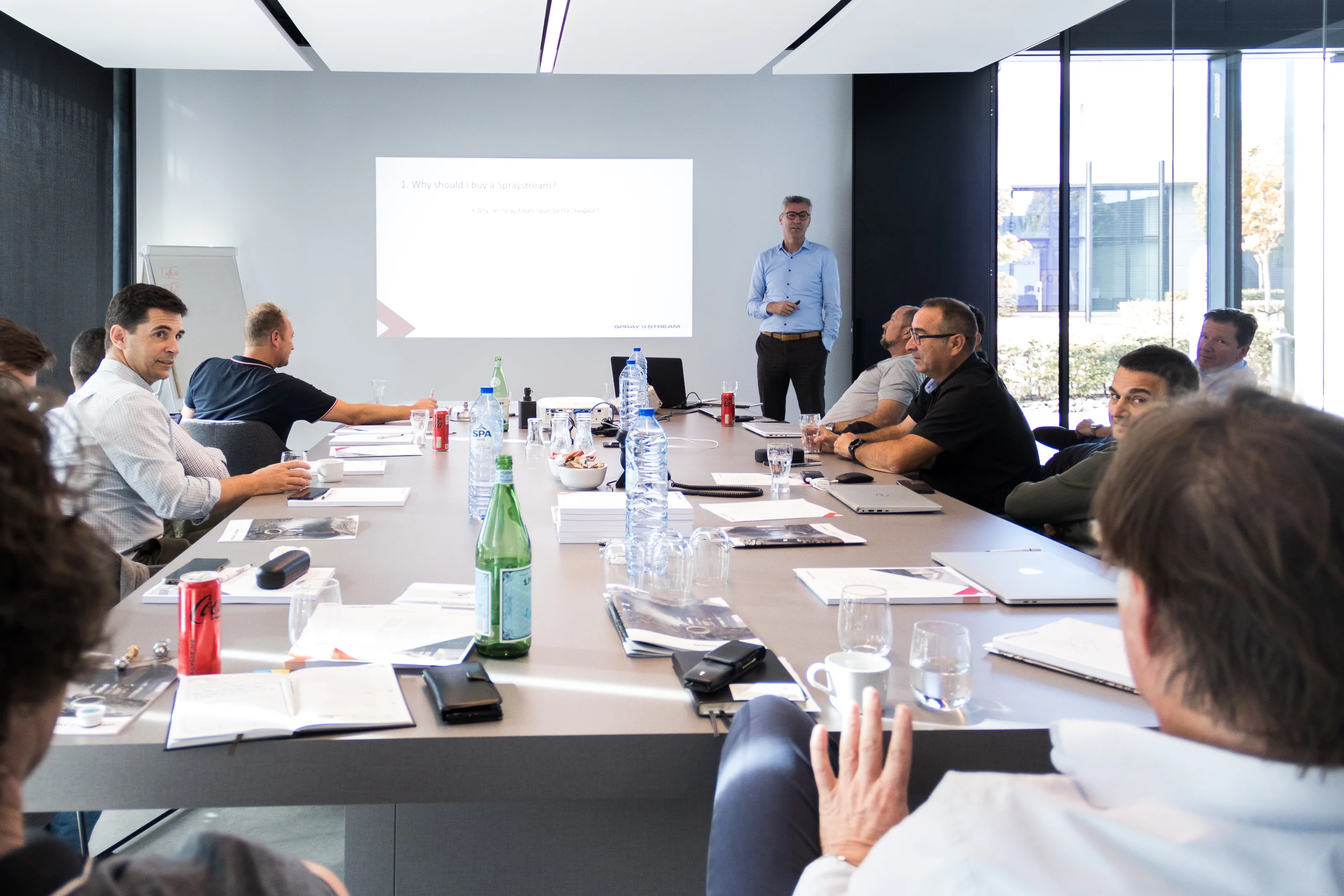
A culture in which ownership is the norm.
Not because you asked for it, but because roles, mandates and leadership behaviour finally allow it. And because there is a number you can come back to.
Ready to know where you stand?
One conversation of 30 minutes. You tell us where the previous programme got stuck, we tell you whether the 4D model changes anything about that.